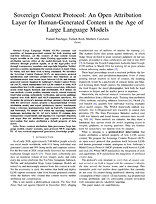
Introducing the Sovereign Context Protocol
A research protocol for how AI systems should access human-created content — with licensing, attribution, and royalties designed in. This is iSonic's long-term direction, not a control a creator can switch on today.
Read the Research Paper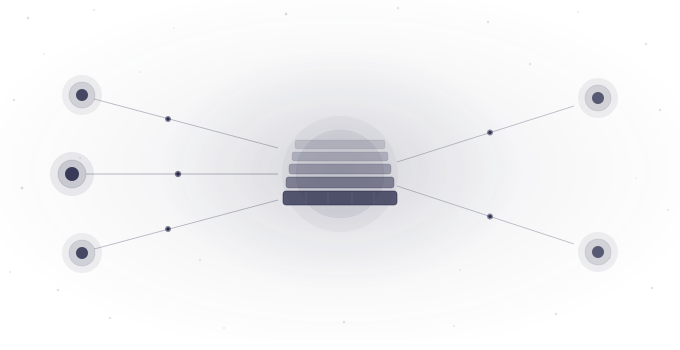
The Attribution Gap
LLMs consume human content. Creators remain invisible.
The entities building LLMs capture enormous value from human-generated content — without attribution or compensation to its creators.
This is now a legal reality:
- The New York Times sued OpenAI for unauthorized use of millions of articles
- The Authors Guild's class action against Anthropic proceeded to trial after a judge rejected a fair use defense
- French regulators fined Google €250 million for training on press content without notifying publishers
Law is reactive, slow, and jurisdiction-dependent. SCP is proposed as a protocol-level intervention that would make attribution a default property of how LLMs access content.
70%
License omission rate across 1,800+ AI training datasets audited by the Data Provenance Initiative
0
Existing runtime mechanisms for creators to know when, by whom, and how their work is consumed
How It Works
Built for the way AI actually consumes content
Clean Data Pipeline
The protocol is designed so AI companies could access a continuously updated corpus of creator content licensed for model training, with a legal chain of custody — no scraping, no ambiguity.
Regulatory & Legal Compliance
As AI regulation accelerates globally, licensed data is no longer optional. SCP is specified as the compliance infrastructure AI companies would need before regulators mandate it.
Full Audit Trail
The design requires every content asset in the pipeline to carry a verifiable record of origin, permissions, and usage — what data was used, under what license, and how.
Design Principles
Specified so the rules cannot be designed around
These are design principles for the proposed protocol — not controls that are enforced for creators on iSonic today. An SCP deployment would log attribution, keep a license record, and leave a royalty trail. That infrastructure is not a shipping creator feature yet.
I
Attribution by Default
Every access event is logged, and there is no anonymous consumption. If attribution cannot be recorded, data is not served.
II
Creator Sovereignty
Creators control access and can revoke consent. Revocation uses the audit log to identify all affected consumers and enables targeted takedowns rather than blanket policy changes.
III
Protocol Extensibility
New methods can be added without breaking existing consumers. SCP v1.0 defines the baseline; the specification is open-source under Apache 2.0 and designed for community contribution from researchers, AI companies, and creator platforms.
IV
Open-Source Protocol
The SCP specification is open-source — any party can deploy an SCP-compliant server and create provider-specific enrichment such as scoring models, trust networks, and revenue distribution rails.
V
Log-Proportional Revenue
Compensation is specified to be derived from audit-log access counts, weighted by data intensity — not estimated or negotiated. That royalty model is the long-term design, not a payout creators receive today.
Read The Full Protocol in Our Research Paper.
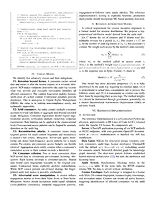
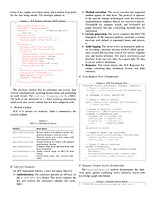
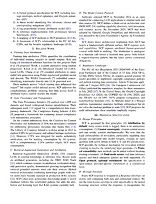
We've published a pre-print paper discussing the formal protocol specification, threat model and revenue attribution models, MCP method mapping, preliminary latency benchmarks, and regulatory landscape.
 View on arXiv